

What is Sight-Singing?
Sight-singing and ear training go hand in hand
Sight-singing is the ability to read and sing music at first sight, also referred to as vocal sight-reading or prima vista.
Sight-singing not only helps you improve your sight-reading skills (the ability to read sheet music), but it will also make you work on your pitch accuracy and rhythmical skills. It is crucial to practice with varied melodies in different keys with rhythmic variations.
Sight-singing and ear training go hand in hand. In order to vocalize the notes you read at the correct pitch, it is necessary to make use of what is called Inner Hearing (in the Kodàly tradition) or Audiation. Mastering your inner hearing skills means that you are able to picture how notes sound without actually hearing them. Once your aural skills are trained enough with the help of proper ear training, sight-singing at the correct pitch will become much more natural.
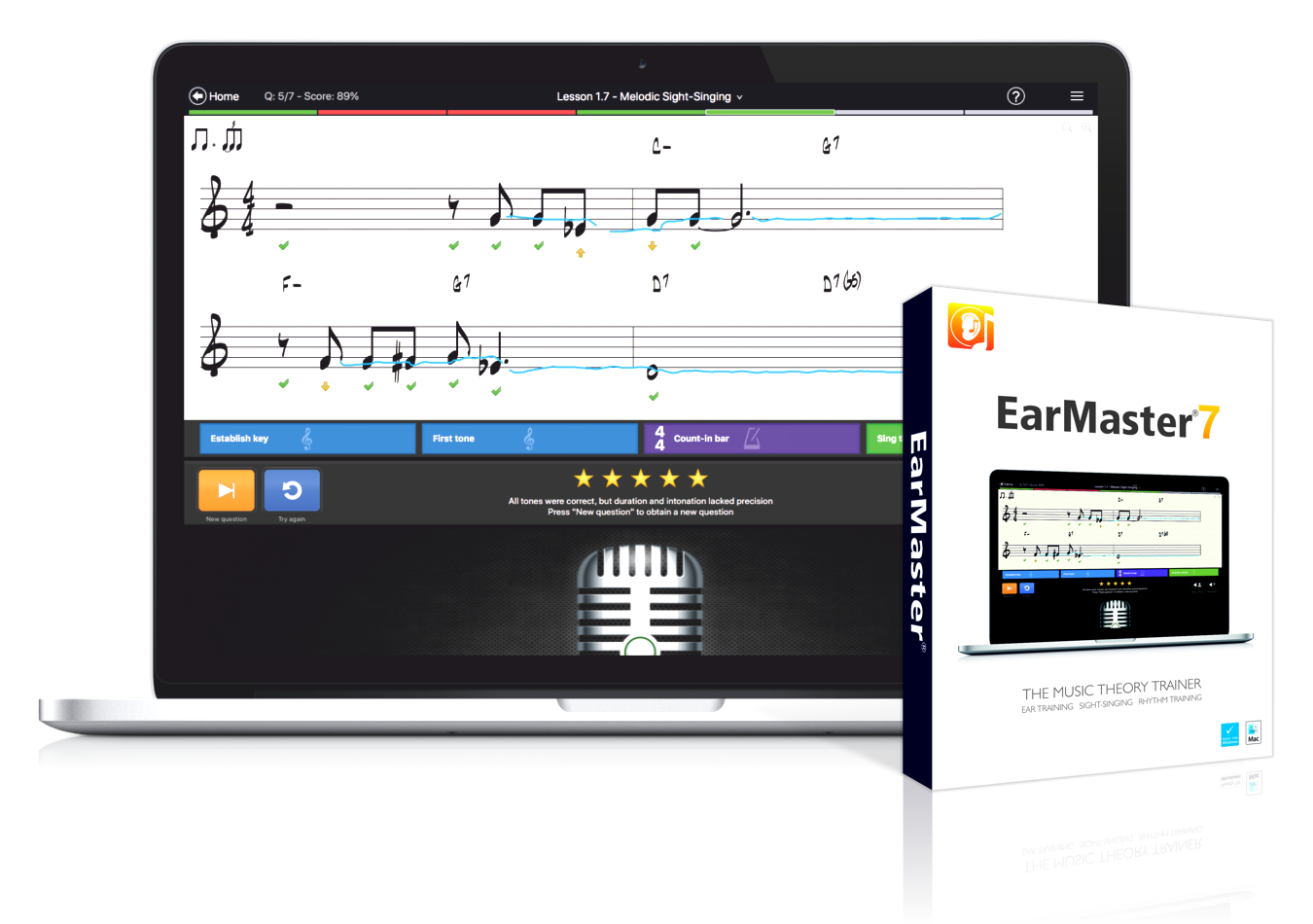
This is exactly what you can achieve with the EarMaster software and App. So if you would like to become a fast sight-reader with great pitch accuracy, a great way to proceed is to download the free version of EarMaster on PC, Mac or iOS and start becoming a better musician.
Melody singback - an easy way to learn to sing on pitch
Melody singback is one of the workshops offered in the EarMaster app on PC, Mac and iOS. It helps you improve your pitch memory and accuracy. After listening to a melody, you will be asked to echo it by singing it into a microphone. EarMaster will then analyze in real-time the accuracy of your performance (intonation and rhythm) and give you detailed feedback.
There is a direct connection between hearing pitches correctly and singing them accurately. Actually, most singers with poor pitch actually just need to train their ear. Therefore, daily ear training sessions will help you develop your singing skills and become a better musician.
Tips for your sight-singing and aural practice

Practice everyday
With ear training, the best results come with short practice sessions done on a regular basis.
The ideal method is to train every single day for about 10 to 20 minutes rather than doing one long sitting once a month.
Don't be shy
The whole point of singing to a computer is that nobody will be behind your back passing judgement every time you don't sing perfectly on pitch. Software like EarMaster is a patient, non-judgmental tutor that will help you improve your skills at your own pace.
Learn form your mistake
When training your sight-singing skills with EarMaster, you get the chance to listen to your performance and compare it to how the melodies written on the staff should have been sung. That way, it is very easy to understand your mistakes and learn from them. In our experience, it is the most efficient and quickest way to learn, because you are learning your brain to adjust to your own sensory experience.
Start improving your sight-singing skills today with EarMaster


